
Architectural Products
ENDUREX™ 555 HIGH IMPACT HURRICANE PANEL
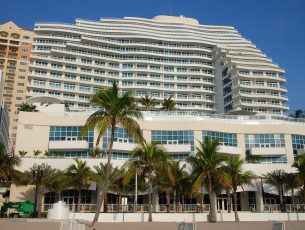
Courtesy of NUDO
Endurex 555 is a lightweight composite hurricane and impact panel, engineered with Nudo as an alternative to heavy steel impact panels, and it meets Miami-Dade testing requirements. Because there’s no steel side, panels are lighter to handle and install, and both faces provide full impact resistance, so there’s no “front or back” installation guideline to follow.
What makes it different from a standard steel hurricane panel?
Competitors typically rely on heavy sheet steel for impact protection. Endurex 555 uses advanced stabilizers that are impervious to moisture and thinner than steel stabilizers, yet stronger, which allows for a higher R-value in a 1″ panel. The panels cut easily on the job site or in the shop, unlike steel, and wet glazing isn’t always required.
Does it meet hurricane code requirements?
Yes. Endurex 555 passed all national hurricane testing requirements and meets Miami-Dade Testing Requirements, with testing and certification provided by Intertek. Miami-Dade approval is the benchmark architects, specifiers, and Authorities Having Jurisdiction (AHJs) look for in hurricane-prone areas.
| Spec | Detail |
|---|---|
| Standard sizes | 48″ x 96″, 48″ x 120″, 48″ x 144″ (also cut-to-size) |
| Optional size | 60″ x 120″ (minimums may apply) |
| Fire rating | Class A |
| Stabilizer thickness | .060″, engineered reinforced plastic composite |
| Foam thickness | 0.75″+ closed cell |
| Aluminum thickness | .032″, .040″, .060″ (some thicknesses have minimums and longer lead times) |
| Aluminum width | 48″ in all colors, 60″ in limited colors |
Frequently Asked Questions
Is Endurex 555 approved for Miami-Dade County?
Yes, it meets Miami-Dade Testing Requirements, with certification provided by Intertek, in addition to passing national hurricane testing.
Is Endurex 555 lighter than a steel hurricane panel?
Yes, that’s the core advantage: it’s a much lighter panel for easier handling and faster installation compared to competitors’ steel plate systems.
Does the panel need a specific front/back orientation during installation?
No. Because there’s no steel side, both surfaces provide full impact resistance, so there’s no front-or-back installation guideline to follow.
What sizes does Endurex 555 come in?
Standard sizes are 48″ x 96″, 48″ x 120″, and 48″ x 144″, with finished panels also available cut-to-size. A 60″ x 120″ option exists with minimums that may apply.